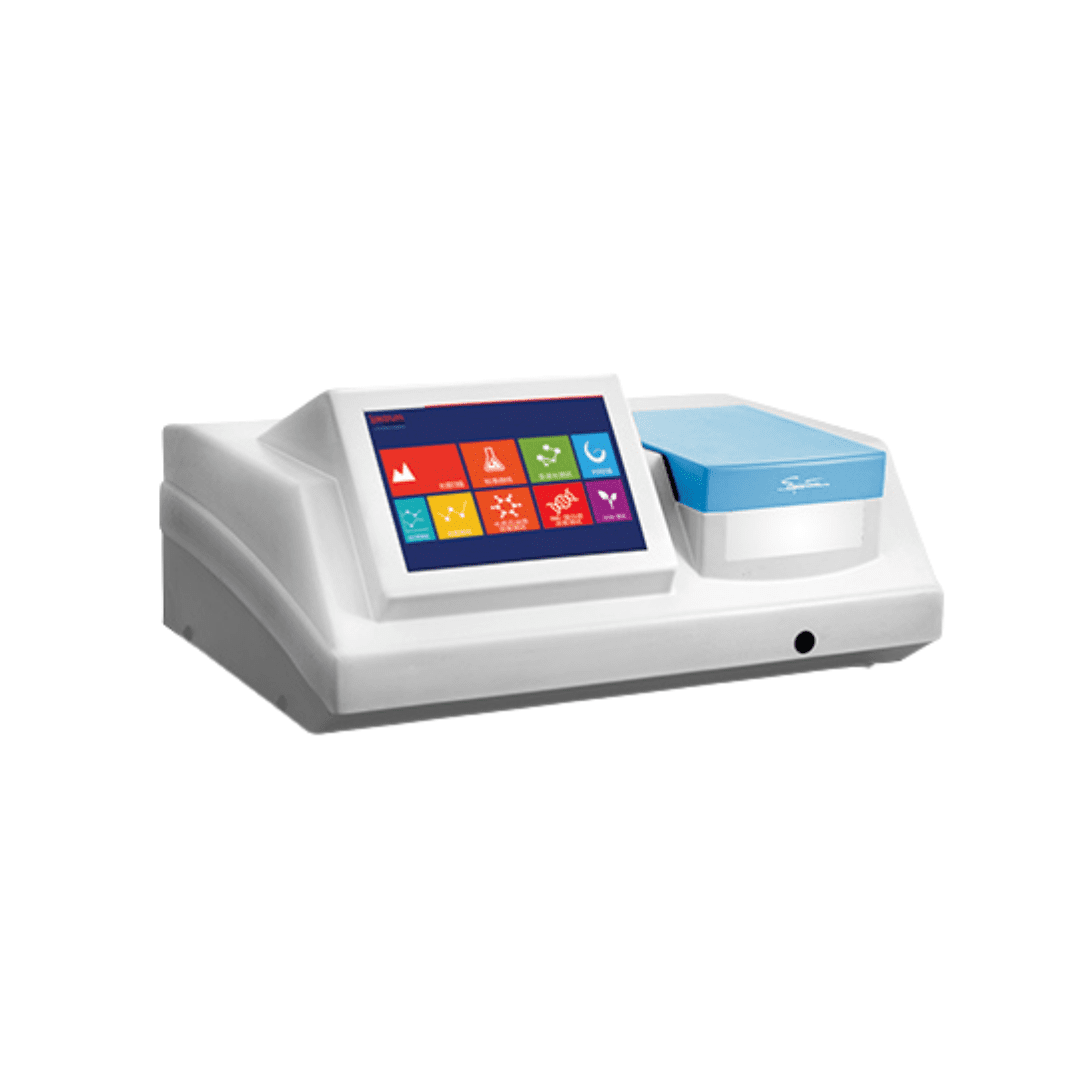
Spectrophotometers
Description
Spectrophotometers are fundamental instruments in analytical laboratories, enabling the measurement of light absorption or transmission properties of samples across a broad spectrum of wavelengths. By quantifying how much light a sample absorbs or transmits, these devices provide critical information about the sample’s composition, concentration, and characteristics.
How Spectrophotometers Work:
- Light Source: The instrument emits light that passes through or reflects off the sample.
- Monochromator: This component selects specific wavelengths of light to isolate the desired range for analysis.
- Sample Interaction: The selected light interacts with the sample, resulting in absorption, reflection, or transmission.
- Detector: Measures the intensity of light after interaction with the sample.
- Data Analysis: The detected light intensity is analyzed to determine the sample’s properties, such as concentration or composition.
Types of Spectrophotometers:
- UV-Vis Spectrophotometers: Measure light absorption in the ultraviolet and visible regions (approximately 200–800 nm). Commonly used for quantifying nucleic acids, proteins, and small molecules.
- Infrared (IR) Spectrophotometers: Analyze light absorption in the infrared region, providing information about molecular vibrations and functional groups.
- Fluorescence Spectrophotometers: Detect emitted light from samples after excitation, offering high sensitivity for detecting low-abundance analytes.
- Atomic Absorption Spectrophotometers (AAS): Utilize the absorption of light by vaporized atoms to determine concentrations of metals and metalloids.
Key Applications:
- Biochemical Analysis: Quantifying nucleic acids, proteins, and metabolites by measuring absorbance at specific wavelengths.
- Environmental Monitoring: Assessing water and air quality by detecting pollutants through their unique absorption spectra.
- Pharmaceutical Development: Ensuring the purity and concentration of active pharmaceutical ingredients. Material Science: Characterizing optical properties of materials, including color and reflectance.
- Clinical Diagnostics: Measuring concentrations of biomarkers in biological fluids for disease diagnosis and monitoring.
Benefits of Using Spectrophotometers:
- High Sensitivity: Capable of detecting low concentrations of analytes with precision.
- Wide Dynamic Range: Suitable for measuring both dilute and concentrated samples.
- Non-Destructive Testing: Allows analysis without altering or destroying the sample.
- Versatility: Applicable across various industries and research fields due to the broad range of measurable wavelengths.
- Data Integrity: Provides reproducible and accurate measurements essential for quality control and research.
Considerations When Selecting a Spectrophotometer:
- Wavelength Range: Ensure the instrument covers the specific wavelengths relevant to your applications.
- Resolution: Higher resolution allows for the detection of subtle differences in absorption spectra.
- Sample Handling: Consider the types of samples (liquid, solid, gas) and required sample volumes.
- Throughput: Evaluate the speed of measurement, especially for high-throughput applications.
- Software Integration: Look for user-friendly interfaces and compatibility with data analysis software.
Incorporating spectrophotometers into your analytical processes enhances the ability to monitor, control, and innovate across various applications. Their precision, versatility, and non-destructive nature make them indispensable tools in modern laboratories and quality control settings.